

Slide 1
Slide 2
Slide 3
    What's Hot

    The Gender Gap in Tech: Why Are There So Few Women in Coding?

    July 16, 2025

    Getting Agentic AI Right: Helen Yu Explains the Human-Centered Future of Customer Experience

    July 1, 2025

    CloudDefense.AI Launches QINA Clarity: Revolutionizing Static Application Security Testing with 98% Signal Accuracy

    July 1, 2025

    Subscribe to Updates

    Get the latest creative news from FooBar about art, design and business.

    Instagram YouTube LinkedIn
    UNI NETWORK Architect & Interior
    • Sign In
    • Home
    • Cover Story
    • Project
      • Video Spotlight
    • Insights
    • Design
      • Sustainable Designs
      • 3D Tours & Models
      • Historical Architecture
      • Upcoming Projects
      • Architecture
      • Interior design
      • Urban design
      • Academia
      • Government Focus
    • Infrastructure
      • Construction
    • People
      • Top Architect
      • Top Designer
    • Customer Stories
    • Events
      • Awards & Recognition
      • Events & Exhibitions
    • Products
      • Product Highlight
    • Discover More
    • More
      • About Us
      • Advisory Council
      • Blog
      • Industries
      • Contact Us
    UNI NETWORK Architect & Interior
    Facebook Twitter Instagram
    Home»Featured»Michigan Auto Workers Face Reduced Profit Sharing

    Michigan Auto Workers Face Reduced Profit Sharing

    0
    By Editorial Desk on March 1, 2025 Featured
    Share
    Facebook Twitter LinkedIn Pinterest Email

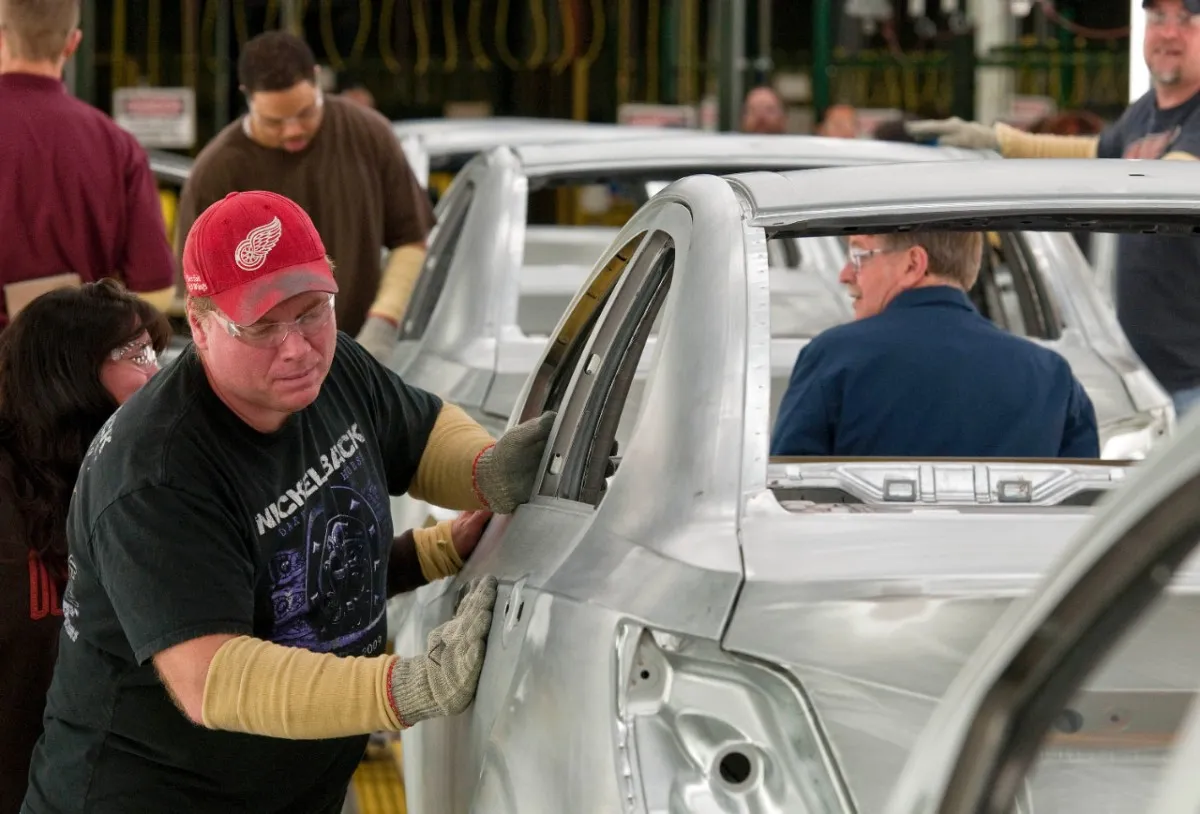
    Michigan auto workers are facing a difficult financial reality as major automakers announce reduced profit-sharing payouts. Rising production costs, persistent inflation, and declining new vehicle sales have squeezed industry profits, leading to lower bonuses for workers who have long relied on these payouts as a key component of their compensation.

    The downturn isn’t just affecting auto workers—it’s also rippling through the broader economy, impacting car buyers, suppliers, and local communities that depend on the industry. The slowdown in new car sales is also driving down values in the used car market, making it more challenging for consumers looking for affordable vehicle options.

    Demo

    With the automotive sector facing multiple headwinds, workers and industry leaders alike are being forced to navigate an uncertain future.

    Why This Matters

    For decades, profit-sharing has been an essential part of compensation for unionized auto workers. Unlike traditional salary or hourly wages, profit-sharing bonuses provide employees with a direct financial stake in the success of the companies they work for. When times are good, these payouts can significantly boost workers’ earnings, helping them pay off debts, save for the future, or make major purchases.

    However, when the industry struggles, those payouts shrink, leaving workers with less financial security. Many auto workers in Michigan have come to rely on these bonuses to help manage the rising costs of living. The current reduction in profit-sharing is therefore more than just a financial inconvenience—it’s a sign of deeper struggles within the industry.

    Declining new vehicle sales are a major concern for automakers, particularly as they continue transitioning toward electric vehicles (EVs) while managing ongoing supply chain disruptions. The shift to EVs requires massive investments in new technology, manufacturing processes, and infrastructure, all while demand for traditional gasoline-powered vehicles remains uncertain. Consumers are also facing higher interest rates on auto loans, making it more expensive to buy both new and used cars.

    The used car market, which saw record-high prices in recent years due to supply shortages, is now experiencing a slowdown as well. With fewer buyers willing to pay premium prices, resale values have dropped, making it harder for dealerships and individuals to turn a profit on used vehicles.

    These factors combined have created a challenging environment for the entire auto industry, with ripple effects extending to workers, suppliers, and communities that depend on manufacturing jobs.

    The Broader Economic Impact

    Michigan has long been the heart of the U.S. auto industry, with thousands of workers directly employed by major automakers like General Motors, Ford, and Stellantis. The state’s economy is heavily tied to the success of the auto sector, and any downturn in the industry can have wide-reaching effects.

    Lower profit-sharing payouts mean less disposable income for workers, which can lead to reduced consumer spending in local businesses, from restaurants and retail stores to real estate and entertainment. When auto workers have less to spend, the impact is felt throughout their communities, affecting everything from housing markets to small business revenues.

    In addition, as automakers look for ways to cut costs, they may reduce production, delay investments, or even consider layoffs—moves that could further disrupt the economy. The uncertainty surrounding the future of the auto industry is creating anxiety among workers, many of whom have already endured job losses and plant closures in recent years.

    What’s Next for Auto Workers and the Industry?

    To navigate these challenges, automakers must find ways to balance cost-cutting measures with efforts to retain and motivate their workforce. Skilled labor is critical to maintaining productivity and innovation, and reducing financial incentives for workers could ultimately harm the industry’s long-term success.

    One potential solution is for automakers to focus on improving efficiency through technology and process improvements. Automation and AI-driven manufacturing could help reduce costs while maintaining high production standards. However, increased automation also raises concerns about job security for human workers, making it essential for companies to find a balance between technological advancement and workforce stability.

    Another factor to watch is how the transition to electric vehicles plays out in the coming years. While EVs represent the future of the automotive industry, the shift requires significant investment in battery production, charging infrastructure, and new supply chain relationships. If automakers can successfully navigate this transition while maintaining strong vehicle sales, they may be able to restore higher profit-sharing payouts in the future.

    Additionally, labor unions and worker advocacy groups may push for new agreements that protect workers from significant fluctuations in profit-sharing payouts. The recent United Auto Workers (UAW) contract negotiations have already highlighted the need for more stable and predictable compensation structures. Future contract negotiations could focus on ensuring that workers receive fair wages and benefits, even during economic downturns.


    Demo
    Share. Facebook Twitter Pinterest LinkedIn Tumblr Email
    Editorial Desk
    • Website

    Demo

    Related Posts

    Ford Recalls Mustang Mach-E Vehicles Amid Safety Concerns

    March 1, 2025

    Dealerships Intensify Fraud Prevention Measures

    March 1, 2025

    Michigan Receives $9.1 Million to Support Small and Diverse Manufacturers

    March 1, 2025

    Leave A Reply Cancel Reply

    Top Posts

    The Gender Gap in Tech: Why Are There So Few Women in Coding?

    July 16, 2025

    Getting Agentic AI Right: Helen Yu Explains the Human-Centered Future of Customer Experience

    July 1, 2025

    CloudDefense.AI Launches QINA Clarity: Revolutionizing Static Application Security Testing with 98% Signal Accuracy

    July 1, 2025

    Global Geomarketing Market Set to Reach $78.9 Billion by 2031, Driven by Location Intelligence and AI Adoption

    July 1, 2025
    Don't Miss
    Big Data Industry

    Big Data’s Resurgence: Fueling the AI Boom in 2025

    By Editorial DeskJune 3, 20250

    As AI technologies surge across industries, the need for robust, scalable, and governed data management…

    Wasp raises $3.7M to make full-stack web development feel like magic

    April 19, 2025

    Michigan’s Automotive Industry: A Deep Dive into the Top 10 Developments

    March 1, 2025

    AI First, People Second? The Frightening New Mantra of Digital Giants

    April 11, 2025

    SUBSCRIBE TO OUR NEWSLETTER

    From our editors straight to your inbox

    ONE STORY AT A TIME

    Social Media Post

    Linkedin

    Linkedin

    Larry Dawson Page’s Next Big Bet: AI-Driven Product Manufacturing with Dynatomics

    Linkedin

    Linkedin

    Exciting Leadership & Strategic Wins at Wipro!

    Linkedin

    Linkedin

    She Codes the Future: Dr. Joy Buolamwini – Fighting Bias in AI

    Linkedin

    Linkedin

    Hugging Face Strengthens AI Security with JFrog Integration

    Watch

    Insights

    Articul8 AI unveils “A8 Essential” – a new GenAI product that enables enterprises to rapidly explore insights from their complex data to unlock value

    SANTA CLARA, Calif., Jan. 07, 2025 (GLOBE NEWSWIRE) — Articul8…

    Read More
    Academia & Industry

    UC Berkeley and Intel Partner to Develop Next-Generation Chips

    The University of California, Berkeley, and Intel have announced a…

    Read More
    Startups and Entrepreneurship

    Supio Secures $60M to Redefine Legal Tech with Human-in-the-Loop AI

    Legal tech is having a moment, and Supio is leading…

    Read More
    Manufacturing

    Precision in Motion: Navigating the Surge of the Global Machine Tools Market

    A Market Quietly Powering the World In the bustling heart…

    Read More
    Startups and Entrepreneurship

    Stripe Launches New Tool for Startups to Manage Global Payments

    For startups, managing global payments can be a headache. Stripe’s…

    Read More
    Sustainability

    U.S. Green Tech Market Set to Triple by 2030: A Sustainable Boom on the Horizon

    This remarkable surge is driven by innovations such as AI-powered…

    Read More
    AI Automation & Robotics

    Salesforce Is Fixing One of AI’s Biggest Problems: Jagged Intelligence

    AI is powerful—but too often, it’s unpredictable. That’s the problem…

    Read More
    Startups and Entrepreneurship

    Black Forest Labs Launches Flux.1 Kontext: A New Frontier in AI Image Editing and Generation

    Announced this month and featured in TechCrunch, the launch represents…

    Read More
    AI Automation & Robotics

    Agentic AI Is Reshaping Enterprise Productivity—And ServiceNow Is Leading the Charge

    In the rapidly evolving landscape of enterprise automation, ServiceNow is…

    Read More

    About Us

    • Uni Network Group
    • Advisory Council
    • Why Uni Network Group

    Downloads

    • Media Pack
    • Industry reports
    • Blogs

    Career

    • Professionals
    • Freelancer
    • Students

    Contact us

    • Editorial coverage
    • Speaker opportunity
    • General enquiries
    • Advertise with us

    UNI NETWORK GROUP

    Kickstart your day with powerful tech insights and bite-sized news—all packed into a crisp 5-minute read, straight to your inbox!

    For latest industries update Subscribe newsletter.

      Advertise with Newsletter  

      Follow Us

      Linkedin X-twitter Facebook Instagram Youtube

      Copyright © 2025 UNI NETWORK GROUP. All rights reserved.

      • About Us
      • Privacy Policy
      • Career
      • Terms & Condition
      Please enable JavaScript in your browser to complete this form.
      Loading